Trade and Tryon: The Corner That Built a Banking City
Trade and Tryon: a trading-path crossroads that became a gold town, then a cotton town, then the second banking capital of America. A walking history of Uptown.
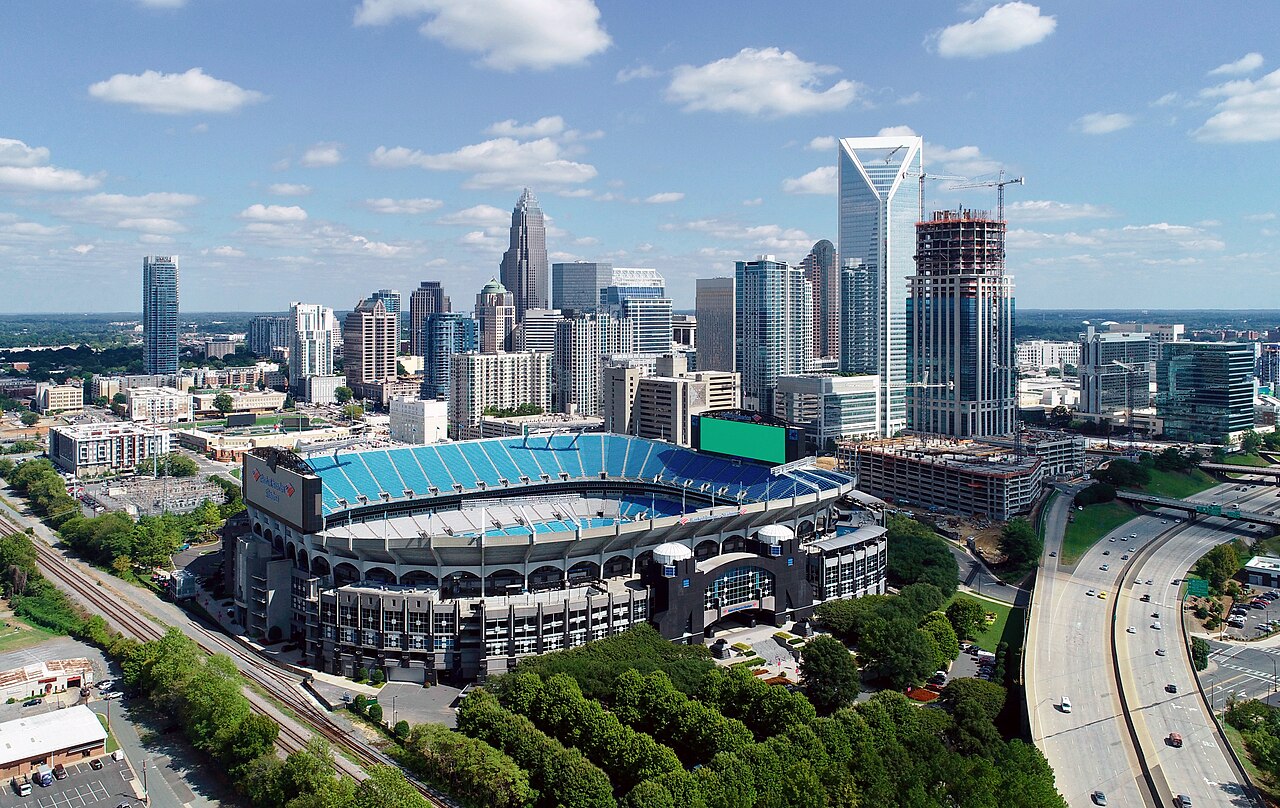
Every city has a center; Charlotte has an intersection. Trade and Tryon streets cross at the heart of Uptown — the city calls its downtown Uptown, a name insisted on by boosters a generation ago until it simply became true — and the four wards of the original city fan out from that corner, which once marked the crossing of two Native American trading paths.
The corner's economics are the city's founding story told twice. Charlotte struck gold first: the Reed Gold Mine nearby produced the first documented gold discovery in the United States in 1799, and the U.S. Mint opened a branch on what is now Mint Street. Then cotton, then railroads, then — decisively — banking. Today the Tryon Street corridor holds the headquarters towers of Bank of America and Truist, and Charlotte ranks as the second-largest banking center in the United States.
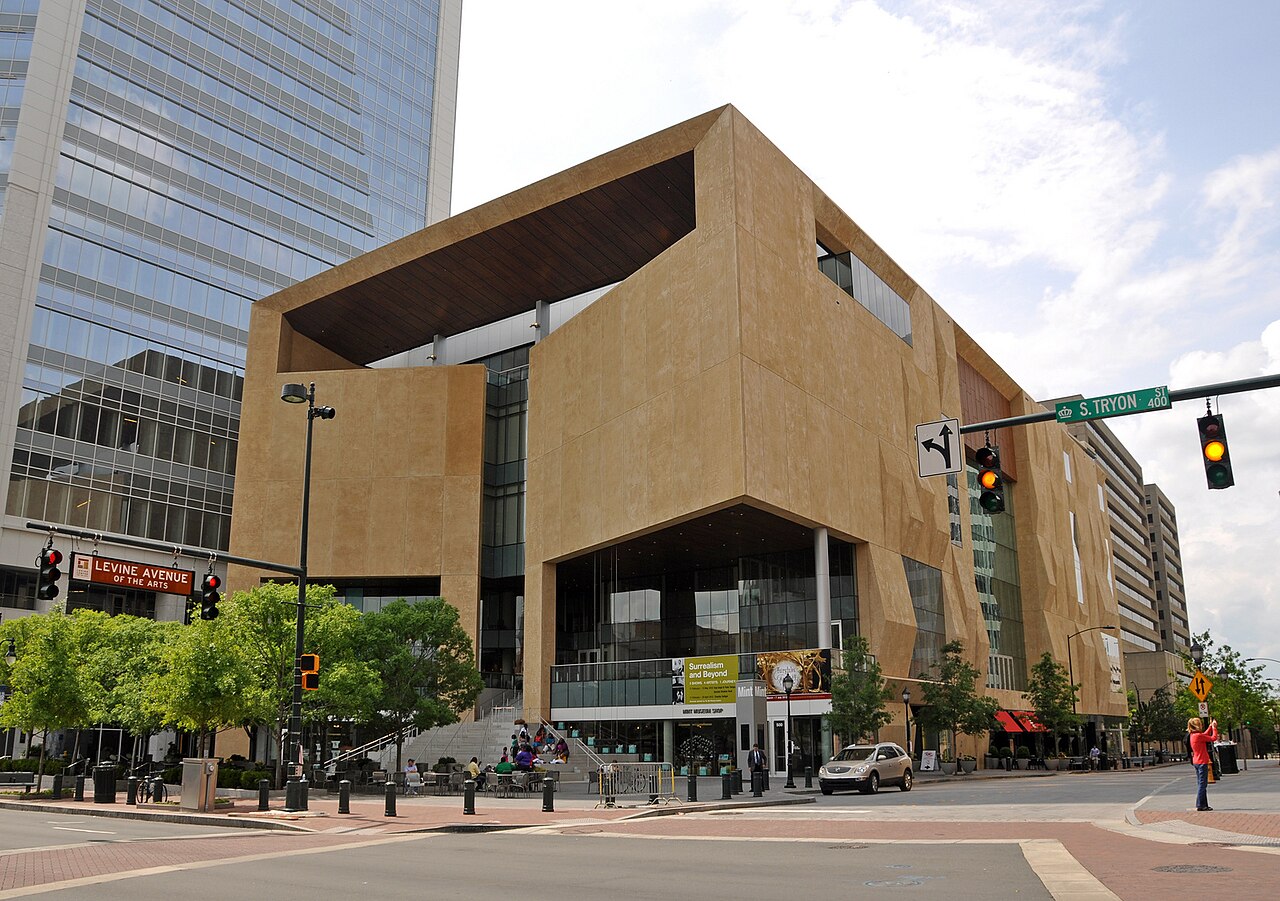
The built evidence lines up along Tryon: the Bank of America Corporate Center's crown spire that gives the skyline its signature; the Duke Energy Center's angular notch beside it; the arts campus at Levine Avenue of the Arts — the Bechtler Museum's tiled cascade, the Gantt Center's woven facade, the Mint Museum's Uptown home — and, at the street's working end, the Fourth Ward's Victorian houses, preserved in the shadow of the towers.
Independence Square, the plaza at the center, carries the city's statuary of its own self-image: Commerce, Industry, Transportation, and the Future, one figure at each corner, posed above the traffic. Charlotteans mostly pass them at speed, which is itself a local tradition.
November Uptown has its own calendar: the arena and stadium crowds crossing on game nights, the holiday market and tree lighting that claim Romare Bearden Park by month's end. The towers light up for occasions and teams alike. Trade and Tryon remains what it has been for two centuries — the place where Charlotte goes to do its business and to show itself off, in that order.